Why Richard Dawkins is Wrong
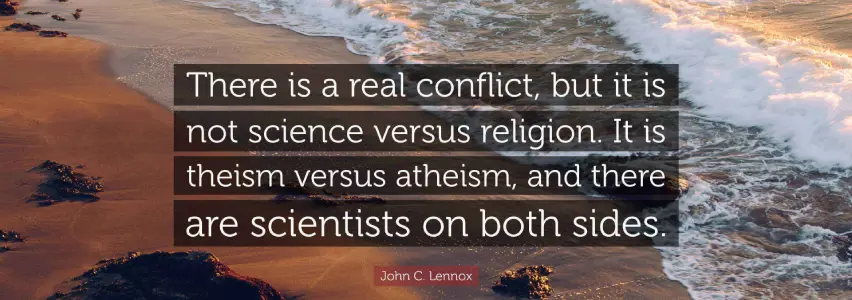
Over the past half-century many prominent scientists and philosophers have recanted their prior atheism. The list would include renowned astronomer Allan Sandage, astrophysicist Sir Fred Hoyle, and philosopher Antony Flew, to mention only three. And the reason for these recantations may surprise you: discoveries from several branches of modern science.
For instance, Sandage, widely regarded as the greatest living observational cosmologist and an atheist since his teens, explained his change of mind as due to the realization that “The world is too complicated in all its parts to be due to chance alone.” (quoted in Lennox, p. 188) Hoyle, after observations confirmed his predictions regarding the properties of helium, beryllium, and carbon atoms that are precisely set at finely-tuned levels essential for life, admitted that nothing had shaken his atheism as much as this discovery. He gradually became persuaded that “A commonsense interpretation of the facts suggests that a superintellect has monkeyed with physics as well as chemistry and biology.” (quoted in Strobel, p. 78)
For Antony Flew, the transformation from atheist to theist began in the late 1980’s, with his growing awareness of discoveries in modern cosmology, including the big-bang origin of the universe and the fine-tuning argument from physical constants: “I confessed at that point that atheists have to be embarrassed by the contemporary cosmological consensus.” (Flew, p. 135)
To his credit, he carefully investigated the evidence, and in a 2004 BBC radio interview Flew announced that “a superintelligence” is the only good explanation for the origin of life and for the complexity of nature. Flew more fully explained the reasons for his recantation in a 2007 book simply titled There is a God: how the world’s most notorious atheist changed his mind.
Yet the world’s currently most notorious atheist, British zoologist Richard Dawkins, still sticks to his atheistic guns. At least part of the reason seems to be that Dawkins, as a zoologist, has trouble understanding the modern discoveries from physics, chemistry, biochemistry, and astronomy, as pointed out by physicist John Barrow who remarked to Dawkins in a public discussion, “You have a problem with these ideas, Richard, because you are not really a scientist.” Barrow maintains that thinkers such as Dawkins “have a limited intuitive understanding of complexity … and are only interested in outcomes, in what wins over others. But outcomes tell you almost nothing about the laws that govern the universe.” (Flew, preface by Roy Abraham Varghese, pages XIX-XX)
Was the universe designed for life?
 The evidence for the fine-tuning of the universe is known as the anthropic principle, and perhaps the simplest example is the strength of gravity. Imagine a ruler, or an old-fashioned linear radio dial, stretched from one end of the known universe to the other, separated into billions upon billions of one-inch increments. The dial represents the entire range of force strengths in nature, from gravity, the weakest, to the strong nuclear force which binds protons and neutrons in the nuclei being the strongest. The range of possible settings for the strength of gravity can then be thought of as at least as large as the difference between the weakest and strongest forces in nature. Move the dial one inch in either direction, and calculations show that the effect on life would be catastrophic. Move the dial one inch to the right, and animals no larger than insects with thick legs could exist, and stars with lifetimes long enough to sustain life would not be possible. Make gravity slightly weaker, and nuclear fusion would not be possible, meaning no stars can form. As physicist-philosopher Robin Collins remarked in an interview, “gravity has an incomprehensibly narrow range for life to exist. Of all the possible settings on the dial, from one side of the universe to the other, it happens to be situated in the exact right fraction of an inch to make our universe capable of sustaining life.” (quoted in Strobel, p. 132) And gravity is only one example from among over thirty physical constants that require precise calibration for a life-enabling universe.
And not only must the values of the various constants be precisely calibrated, but the ratios between several of the constants must also be delicately balanced. For instance, Paul Davies has calculated that if the ratio of the nuclear strong force to the electromagnetic force had been different by only 1 part in 1016 then no stars would form. Faced with many such spectacular examples of fine-tuning, Davies says “The impression of design is overwhelming.” (quoted in Lennox, p. 71)
In his book The God Delusion Dawkins tells us that the anthropic principle and God function as “alternative explanations” (p. 164) But Oxford professor of mathematics and philosophy John Lennox has rightly described this as “false logic”, since:
“[the anthropic principle] does not belong to the category of explanation at all. All the anthropic principle does is to tell us that for life to exist, certain necessary conditions must be fulfilled. But what it does not tell us is why those necessary conditions are fulfilled. The anthropic principle, far from giving an explanation for the origin of life, is an observation that gives rise to the need for such an explanation.” (p. 73)
There is not space here to do justice to all of the various lines of evidence for the anthropic principle: yet suffice to say that they point uncannily toward the existence of a being of immense power and vast intelligence who has intricately balanced or “fine-tuned” various constants and properties of the universe to a mind-boggling degree of precision in order to make life possible. As former atheist Patrick Glynn has written, “all the seemingly arbitrary and unrelated constants in physics have one strange thing in common – these are precisely the values you need if you want to have a universe capable of producing life.” (quoted in Strobel, p. 126)
A very accessible treatment of this evidence can be found in former militant-atheist Lee Strobel’s excellent book The Case for a Creator, and in the excellent accompanying documentary of the same name. Somewhat more detailed treatments can be found in Nature’s Destiny by geneticist Michael Denton, and in God’s Undertaker: has science buried God?, by mathematician-philosopher John Lennox. And it should be pointed out that these arguments based on fine-tuning are certainly not “God of the gaps” arguments: it is the advance of science, not the ignorance of science, that has revealed this evidence of superhumanly-precise fine-tuning.
Do we live in a multiverse?
Those scientists that maintain their atheism can only do so with either ignorance of these recent findings, as seems to be the case with Dawkins, or with the desperate last-resort of the various hypothetical “multiverse” theories, in which values for the various physical constants are randomly set at the creation of each hypothetical universe. The idea central to all such multiverse theories is that if enough universes are created, eventually at least one will have all physical constants set at precisely the correct levels necessary for life. None of these multiverse speculations have even the slightest shred of evidence in support. There seems no possible way of testing any of them, and most defenders do not even propose trying. It is worth noting that he idea of a multiverse first appeared in a story by science fiction writer Douglas Adams, and was later featured in an episode of Star Trek: the Next Generation. As mathematician George Ellis remarked in his article “The Untestable Multiverse”, “they are not observationally or experimentally testable — and never will be. Scientists are beginning to confuse science with science fiction.”
Many physicists agree, such as eminent quantum theorist John Polkinghorne, who explicitly rejects the multiverse interpretation, calling it “pseudo-science”: “Let us recognize these speculations for what they are. They are not physics, but in the strictest sense, metaphysics. There is no purely scientific reason to believe in an ensemble of universes.” (quoted in Lennox, p. 74)
It should be clear that motivation behind the idea of a “multiverse” is ideological, not scientific: most of the various multiverse theories were proposed simply to oppose the prima facie case for design that fine-tuning implies. Nobel Laureate physicist Robert Laughlin has written:
A key symptom of ideological thinking is the explanation that has no implications and cannot be tested. I call such logical dead-ends anti-theories because they have exactly the opposite effect of real theories: they stop thinking rather than stimulate it.” (quoted in Lennox, p. 158)
And, as physicist-philosopher Robin Collins has brilliantly argued, the existence of many universes would not destroy the case for design, but would rather take the issue back up one level, and would, in fact, point toward design. This is because it would require the existence of a random-universe generator of mind-boggling sophistication and complexity, and so, “if a many-universe-generating system exists, it is best explained by design.” He concludes:
“Theists have nothing to fear from the idea that there may be multiple universes. There would still need to be an intelligent designer to make the finely tuned universe-generating process work” (quoted in Strobel, p. 144)
Does evolution imply atheism?
Nevertheless, Dawkins seems to think that at least one aspect of biology does point toward atheism: Darwin’s theory of natural selection. “Darwin made it possible to be an intellectually fulfilled atheist”, Dawkins maintains in his book The Blind Watchmaker.
But is it true that Darwin’s theory implies atheism? If this were true then most biologists and paleontologists would be atheists. But this does not seem to be the case, as biologist Stephan Jay Gould tells us: “Either half my colleagues are enormously stupid, or else the science of Darwinism is fully compatible with conventional religious beliefs – and equally compatible with atheism.” (quoted in Lennox, p. 92)
John Lennox calls the opinion that evolution implies atheism “a category mistake”, and explains:
Evolution purports to be a biological mechanism, and those who believe in God regard him as a personal agent who, among other things, designs and creates mechanisms. Understanding the mechanism by which a Ford car works is not in itself an argument for regarding Mr Ford himself as non-existent. The existence of a mechanism is not in itself an argument for the non-existence of an agent who designed the mechanism. (p. 89)
This type of reasoning has resulted in many leading scientists accepting the evolutionary mechanism as the Creator’s way of producing life’s diversity. In other words, the evolutionary viewpoint can be considered as merely pushing the issue of intelligent origin back up one level, from primary to secondary causes. Darwin himself was so impressed by this argument that he included it in the second edition of Origin of Species.
Lennox elaborates on this point:
In other words, the evolutionary viewpoint, far from invalidating the inference to intelligent origin, arguably does nothing more than moving it back up one level, from the organisms to the processes by which those organisms have come to exist. Think of a man who, on seeing a car for the first time, supposes that it is made directly by humans only later to discover it is made in a robotic factory by robots which in turn were made by machines made by humans. His initial inference to intelligent origin was not wrong. Direct human activity was not detectable in the robotic factory because it is the existence of the factory itself and its machines that is, ultimately, the result of intelligent human activity. (p. 91)
And as physicist-theologian Alister McGrath points out: “There is a substantial logical gap between Darwinism and atheism which Dawkins prefers to bridge by rhetoric, rather than evidence.” (quoted in Lennox, p. 93)
And in his excellent book Lennox adds the following observation:
Those scientists who think that there is simply no case to be made for evolutionary biology having any implications for theism or atheism maintain that there is no need to consider evolution any further in this connection, although they do not deny that science can make a contribution to the science-religion debate. For example, the theists among them tend to support the fine-tuning arguments advanced earlier. Indeed, we cannot emphasize too strongly the fact that biological evolution (whatever its extent) requires a fine-tuned universe in which to occur so that no arguments about the nature or status of evolution can undermine the arguments advanced hitherto [for fine-tuning] (p 93, emphasis in original)
A Scientific Dissent from Darwinism
It is important to realize that in recent decades Darwin’s famous theory has come under increasingly rigorous questioning: by biochemists, geneticists, philosophers, and mathematicians. Indeed, in 2001 one hundred prestigious scientists took out a two- page advertisement in a national magazine under the banner “A Scientific Dissent from Darwinism”, announcing “We are skeptical of claims for the ability of random mutation and natural selection to account for the complexity of life. Careful examination of the evidence for Darwinian theory should be encouraged.”
There is indeed one sense in which there is undisputed evidence of Darwinian evolution: bacteria have evolved resistance to many antibiotics, and the beaks of finches have been shown to change and vary in order to adapt to local conditions. These are examples of so-called micro-evolution, the gradual appearance of minor variations in a specie that contribute to its members’ survival. The real question is whether or not Darwinian evolution can account for the existence of bacteria and finches in the first place.
Many people today do not realize that most of the early criticisms of natural selection came not from theologians, but rather from paleontologists, who pointed out that the fossil record did not support Darwin’s theory of gradual, incremental changes in species, in which tiny changes gradually accumulate and eventually lead to the emergence of entirely new species. Darwin was well aware of this lack of evidential support, and wrote in Origin of Species: “The number of intermediate varieties, which have formerly existed on the earth, [should] be truly enormous. Why then is not every geological formation and every stratum full of such intermediate links? Geology assuredly does not reveal any such graduated chain; and this, perhaps is the most obvious and gravest objection to my theory.” (p.227) In 1859 Darwin could not cite one single example of a transitional form in the fossil record. Yet he thought that future discoveries would vindicate his theory. Then as if on cue, two years after publication of his book Archeopteryx was found, and celebrated as a missing link, a transitional form between reptiles and birds, seemingly providing support for Darwin’s theory.
So, what does the record reveal today? If anything, it provides even less support for Darwin’s theory than did the fossil record of his day. For as paleontologist David Raup tells us:
Well, we are now about 120 years after Darwin and the knowledge of the fossil record has been greatly expanded. We now have a quarter of a million fossil species but the situation hasn’t changed much…and ironically, we have even fewer examples of evolutionary transitions than we had in Darwin’s time. By this I mean that some of the classic cases of Darwinian change in the fossil record, such as the evolution of the horse, have had to be discarded or modified as a result of more detailed information. (Raup, p. 25.)
Stephan Jay Gould said “The extreme rarity of transitional forms in the fossil record persists as the trade secret of paleontology” and “a species does not arise gradually by the steady transformation of its ancestors; it appears all at once and ‘fully formed.’” (Gould, p. 14) His fellow paleontologist Niles Eldredge goes further with this astonishing admission:
We paleontologists have said that the history of life supports [the story of gradual adaptive change] all the while knowing that it does not. (Eldredge, p. 144.)
Even Archaeopteryx, once lauded as the missing link between reptiles and birds, has turned out to be nothing more than an extinct species of bird. Paleontologist Collin Patterson has the Archaeopteryx fossil under his care, and has remarked bluntly: “I will lay it on the line – there is not one such [transitional] fossil for which one could make a watertight argument.” (quoted in Lennox, p.115)
Several years ago, Gould and Eldredge proposed a new hypothesis called “punctuated equilibrium” in a desperate attempt to explain away the gaps in the fossil record. They suggested that perhaps subpopulations of species occasionally became isolated, and then subject to new and extreme conditions, rapidly evolved, conveniently leaving behind no fossils to document the process. When they rejoined the larger population, the result was a fossil record that suggested the sudden appearance of new species. This idea has been roundly criticized, and essentially remains speculation in search of evidence.
Perhaps the strongest fossil-record challenge to Darwinian gradualism is the so-called Cambrian explosion, during which about 540 million years ago all the major animal groups, now called phyla, abruptly appeared in the fossil record, fully formed. Before this, there were some worms, sponges, and jellyfish, and then suddenly there appear all the major body plans, including creatures with sophisticated eyes and brains; and this presumably is when consciousness mysteriously appeared in the world.
In the Cambrian period between twenty and thirty-five completely novel body plans abruptly appear, with no evidence of transitional ancestors. Some of these, such as the trilobite, are now extinct; yet it is the sophistication of trilobite eyes that is worth noting. Each eye had two lenses. Physicist Riccardo Levi-Setti has worked on the optics of these eyes, and has shown that the double-lenses worked to increase visual acuity underwater. David Raup, whom we met earlier, has marveled that “the trilobites 450 million years ago used an optimal design which would require a well-trained and imaginative optical engineer to develop today.” (Raup, p. 24)
This sudden appearance of sophisticated eyes is even more remarkable when we consider the record of a high-level debate between a group of biologists and mathematicians who were interested in biology, which occurred at the Wistar Institute in 1966. Mathematician Stanly Ulam argued that his calculations showed it was highly improbable the eye could have evolved by Darwinian small mutational changes, because the number of mutations would have to be too large to have occurred within the time available in the history of life on earth. The biologists present sought to discredit this evidence, but it is worth noting that Ulam’s calculations were supported by Marcel-Paul Schutzenberger, a professor of mathematics from Paris and member of the French Academy of Sciences. (from Lennox, p. 112)
Astrophysicist and mathematician Sir Fred Hoyle did his own calculations, which also led him to doubt the ability to extrapolate from micro to macro-evolution. His conclusion:
As common sense would suggest, the Darwinian theory is correct in the small, but not in the large. Rabbits come from other slightly different rabbits, not from either [primeval] soup or potatoes. Where they come from in the first place is a problem yet to be solved, like much else of a cosmic scale. (quoted in Lennox, p. 113)
How did life arise?
Another line of evidence for theism comes from the origin of life. As has often been remarked, Darwin’s theory deals with the survival of the fittest, not the arrival of the fittest.
And it is important to note that all explanations of the origin of life so far proposed ultimately fail: As origin-of-life expert Stuart Kauffman has remarked “Anyone who tells you that he or she knows how life got started on the earth is either a fool or a knave. Nobody knows.” (quoted in Lennox, p. 122)
More recently world-famous geneticist Francis Collins has said the same: “But how did self-replicating organisms arise in the first place? It is fair to say that at the present time we simply do not know.” (quoted in Lennox, p. 133-4)
Dean Kenyon, co-author of an influential textbook on the origin of life titled Biochemical Predestination, has since changed his mind about a naturalistic origin of life: “If science is based on experience, then science tells us that the information encoded in DNA must have originated from an intelligent cause.” (quoted in Lennox, p. 187) And to repeat the point made above, this is certainly not a “God of the gaps” argument based upon our ignorance. Kenyon changed his mind regarding a purely naturalistic origin for life based upon advances in molecular biology made since the publication of his textbook.
Is it any wonder 100 prominent scientists signed a public dissent from Darwinism?

Einstein versus Dawkins
In my view, the worst part of Dawkins’ ideological crusade is not his ignorance of modern physics; nor is it his refusal to accept the fact that the fossil record fails to support the predictions of Darwinian evolution. Rather, it is his misleading treatment of the views of Albert Einstein.
The following is from Dawkins’ book The God Delusion:
“Einstein sometimes invoked the name of God (and he is not the only atheistic scientist to do so), inviting misunderstanding by supernaturalists eager to misunderstand and claim so illustrious a thinker as their own.” (p. 34)
Dawkins describes Einstein as a pantheist – someone who uses ‘God’ to refer only to nature – and mentions “the pantheistic reverence which many of us share with its most distinguished exponent, Albert Einstein.” (p. 35)
And
“He was repeatedly indignant at the suggestion that he was a theist.” (p. 39)
In the bibliography of the book Dawkins has included Einstein and Religion, a book written by Einstein’s close friend Max Jammer. Dawkins refers to this book as “my main source of quotations from Einstein on religious matters.” (p. 37) However, those who read the book for themselves will get a very different picture of Einstein’s views. In his own words:
I’m not an atheist, and I don’t think I can call myself a pantheist. (p. 48)
Everyone who is seriously engaged in the pursuit of science becomes convinced that the laws of nature manifest the existence of a spirit vastly superior to that of men, and one in the face of which we with our modest powers must feel humble. (p. 93)
Jammer drives home the point:
Einstein always protested against being regarded as an atheist. In a conversation with Prince Hubertus of Lowenstein, for example, he declared,
‘What really makes me angry is that they [atheists] quote me for support of their views.’ Einstein renounced atheism because he never considered his denial of a personal God as a denial of God. (p. 150)
Similar quotes appear throughout the book, and Roy Abraham Varghese has described Dawkins’ flagrant misrepresentation of Einstein’s views as “patently dishonest.” (Flew, Preface, p. XXII) So, does this misrepresentation make Dawkins a liar?
Not necessarily. One possibility is that Dawkins read this lie about Einstein’s atheism in some other atheist’s book, or on some atheist website, simply assumed it was too good to be untrue, and then decided it would make his own views seem more impressive if he included it in his book. The puzzle is of course why Jammer’s book is referenced in the bibliography, if Dawkins could not be bothered to read it.
And what about the views of Dawkins’ professed hero? Did Darwin himself agree with Dawkins that his theory of evolution implied atheism? In his hero’s own words Dawkins also will find no comfort, as in his autobiography Darwin tells us:
[Reason tells me of the] extreme difficulty or rather impossibility of conceiving this immense and wonderful universe, including man with his capability of looking far backwards and far into futurity, as the result of blind chance or necessity. When thus reflecting I feel compelled to look to a First Cause having an intelligent mind in some degree analogous to that of man; and I deserve to be called a Theist.
Chris Carter is an Oxford-trained philosopher of science, with a keen interest in controversies at the intersection of science and philosophy.
He has contributed two articles to the highly acclaimed book Debating Psychic Experiences. Information on his latest book and a brief essay summarizing the ideas in the book can be found here:
https://www.llewellyn.com/author.php?author_id=7259
Bibliography
 Darwin, Charles, Origin of Species, World’s Classics Edition, Oxford, Oxford University Press, 1996.
Darwin, Charles, 1958. The Autobiography of Charles Darwin 1809 – 1882, ed. Nora Barlow. London: Collins. Pp. 92-3.
Dawkins, Richard, The God Delusion.
Denton, Michael, 1998. Nature’s Destiny: How the Laws of Biology reveal Purpose in the Universe. New York, NY: The Free Press.
Davies, P. (2006) The Goldilocks Enigma: Why is the Universe just right for Life? Allen Lane, London.
Eldredge, Niles, Time Frames, 1985, Simon & Schuster, NY, NY.
Ellis, G (2011) “The Untestable Multiverse” Nature, 469, 295.
Flew, Antony, 2007, There is a God: How the world’s most notorious atheist changed his mind, HarperCollins, New York, NY.
Gould, Stephen Jay, “Evolution’s Erratic Pace,” Natural History 86.
Jammer, Max, 2002, Einstein and Religion. Princeton University Press, Princeton, NJ.
Lennox, John, 2009, God’s Undertaker: Has science buried God? Lion Hudson plc, Oxford, UK.
Moorhead, P.S., Kaplan, M.M. eds., Mathematical Challenges to the Neo-Darwinian Interpretation of Evolution, Wistar Institute Press, 1967.
Raup, David, “Conflicts between Darwin and Paleontology,”, Field Museum of Natural History bulletin, Chicago, Field Museum of Natural History, v. 50 (1979), 22 – 29. http://www.biodiversitylibrary.org/item/21020.
Strobel, Lee, 2004, The Case for a Creator. Zondervan, Grand Rapids, Michigan.
1 Comment
Stafford Betty, Ph.D.
December 5, 2025 - 1:21 amThe internet, especially YouTube, is full of opinion about Dawkins, most of it negative. But none of it is as thorough, as compelling, or as elegant as Chris’s analysis here.